
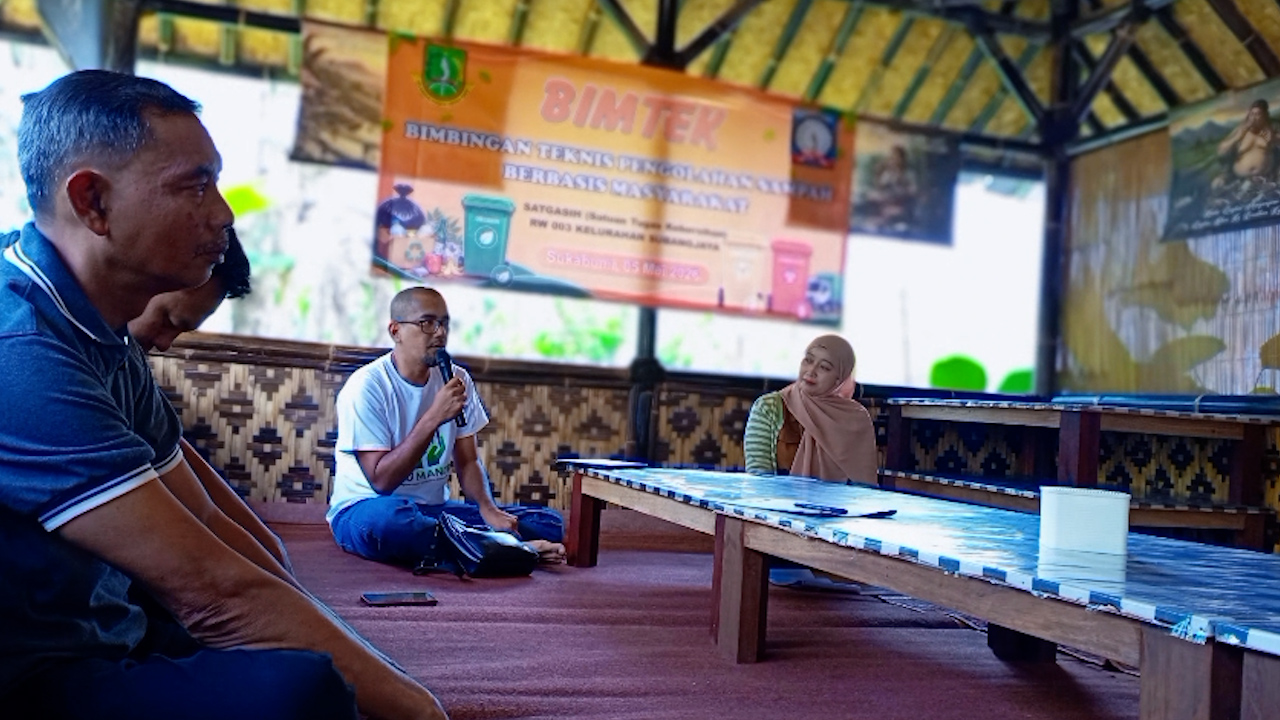

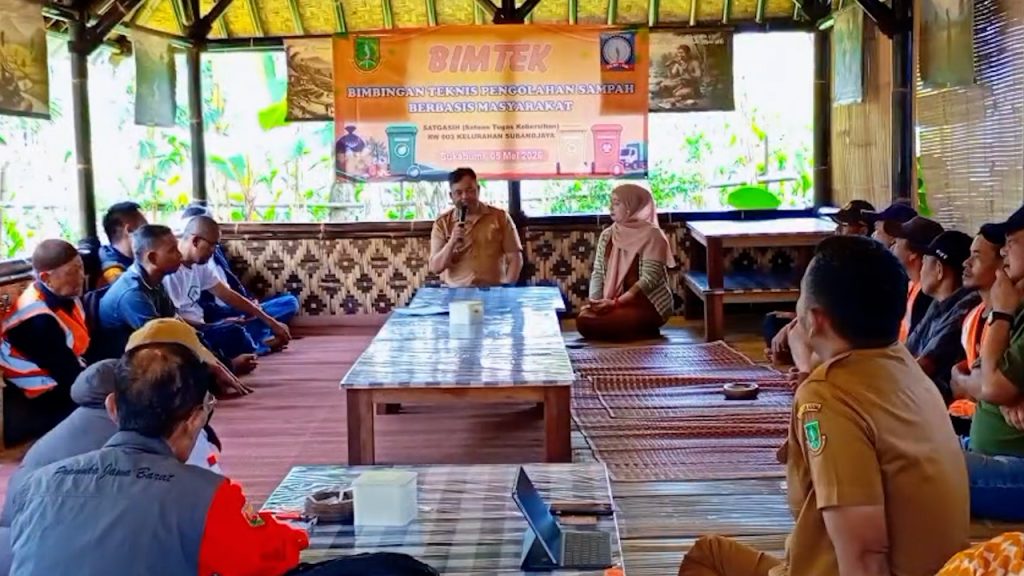
Yesterday, BSU Mandiri had the opportunity to join a meaningful community discussion in Subangjaya, Sukabumi, where we were invited to speak at a technical guidance session on community-based waste management. The session brought together the cleanliness task force of RW 03 and local neighborhood leaders from five RT areas, all of whom play an important role in keeping their community clean and organized.
The event was held as part of a thanksgiving gathering to celebrate an important achievement for Subangjaya Village, which recently won second place in the city-level cleanliness competition in Sukabumi. For the people of RW 03, this recognition is more than just an award. It reflects months of hard work, cooperation, and a shared commitment to creating a healthier environment.
RW 03 is not an area with easy conditions. The neighborhood is made up of narrow alleys, bordered by a busy public road on one side and a river on the other. These physical challenges make waste management more complicated than in many other urban communities. Even small amounts of unmanaged waste can quickly affect the appearance of the area, create sanitation risks, and in some cases threaten nearby waterways.
This is exactly why the achievement matters.
During the session, BSU Mandiri shared practical perspectives on what it takes to maintain environmental progress after public recognition. In many communities, cleanliness improves significantly during competition periods, but once the judging process is over, old habits often return. The discussion focused on how RW 03 can avoid that pattern and continue building a culture of environmental responsibility.
One of the main messages we shared was simple: winning a competition is an important milestone, but sustaining clean habits is the real success.
We also discussed the different roles needed to make this happen. The local cleanliness task force is not only responsible for collecting or handling waste. They are community motivators, educators, and examples for others. Meanwhile, neighborhood leaders play a strategic role in encouraging participation, creating simple local agreements, and keeping residents engaged over time.
The conversation was highly interactive and grounded in the real challenges faced by the community. Participants openly talked about issues such as household waste sorting, maintaining consistency after major campaigns, and preventing littering in public access areas.
Another important point raised during the session was the strength that RW 03 already has. The community has an active cleanliness task force, an operational compost well, local leadership support, and valuable experience from participating in city-level environmental programs. These are strong foundations that many communities are still working to build.
For BSU Mandiri, opportunities like this are important because community-based waste management is never only about infrastructure or systems. It is about people, habits, trust, and collaboration.
What we witnessed today was not just a formal meeting. It was a reminder that meaningful environmental change often begins in small neighborhood gatherings, through honest conversations and collective commitment.
We are grateful to the Subangjaya Village administration, the RW 03 cleanliness task force, and all neighborhood leaders who continue to show that even communities with limited space and complex challenges can become examples of local environmental action.
Cleanliness should not exist only for competitions or special events. It becomes powerful when it becomes part of daily life.