
Waste management does not begin at a landfill. It begins at home.
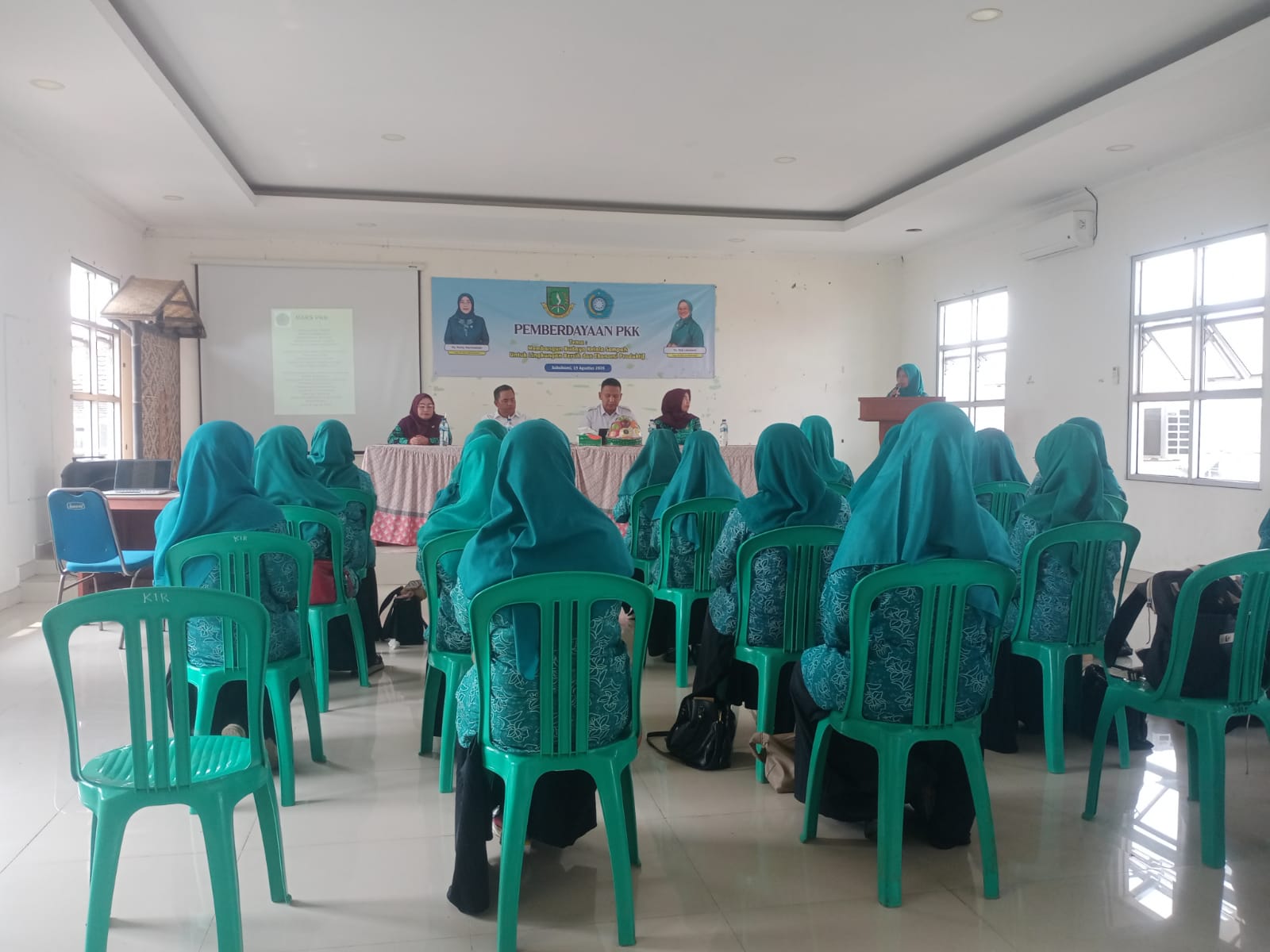
This message became the central theme of a community empowerment session held by TP PKK Kelurahan Subangjaya on Wednesday, 19 August 2026, for PKK cadres in Subangjaya, Sukabumi.
The session, titled “Building a Waste Management Culture for a Cleaner Environment and a Productive Economy,” brought together community leaders to discuss how better household waste management can contribute not only to a cleaner environment, but also to local economic opportunities.
BSU Mandiri was invited to share its experience in developing community-based waste management and demonstrating how recyclable waste can be managed as a resource rather than simply treated as waste.
From Waste Problems to Community Solutions
For many households, waste is still seen as something that needs to be removed from the house as quickly as possible.
However, what happens before waste is collected can make a significant difference.
When recyclable materials such as plastic bottles, cardboard, paper, and metal are mixed with food waste and other residual waste, their potential value can decrease. When materials are separated at the source, they become easier to collect, sort, and channel into recycling systems.
This is where household waste separation becomes important.
The message shared during the session was simple:
Waste management starts with the decisions we make at home.
Communities do not always need to begin with expensive infrastructure or complicated systems. They can start by building simple and consistent habits.
The Role of Community Waste Banks
BSU Mandiri has been developing a community-based waste bank model in Subangjaya.
The approach is not simply about collecting recyclable waste. It is about creating a system that connects households, community participation, waste collection, sorting, and economic value.
Through a community waste bank, recyclable materials can be separated at the household level, collected and recorded, and then channelled into the recycling chain.
This creates an important shift in perspective.
Waste is no longer seen only as something that needs to be disposed of.
It can also be seen as a resource with environmental and economic value.
Why PKK Can Become a Key Driver of Change
One of the important opportunities discussed during the activity was the role of PKK cadres in promoting household waste management.
PKK does not need to become a waste collection service.
Its strength is different.
PKK can help encourage behavioural change within families and communities.
The pathway can be simple:
Mother → Family → RT → RW → Kelurahan
A change in one household can influence other family members. Several households can create a stronger neighbourhood habit. Neighbourhood-level practices can then expand through RTs and RWs.
This makes community organizations such as PKK important local multipliers for environmental behaviour change.
From Environmental Action to Economic Value
Better waste management can also contribute to a more productive local economy.
When recyclable materials are separated and collected systematically, they can enter a value chain rather than being lost as mixed waste.
For example, a community with dozens of participating households can gradually accumulate significant quantities of recyclable materials every month.
The exact economic value depends on the type and quality of materials, volume, market prices, participation, and operational costs. However, the principle remains the same:
What is separated and managed properly has a better chance of retaining its value.
This is one of the foundations of a circular economy.
Instead of following a linear model of take → use → dispose, communities can work toward a system where materials are collected, recovered, recycled, and returned into productive use.
A Step Toward a Circular Community in Subangjaya
The 19 August activity was attended by the Chairperson of TP PKK Sukabumi City, the Head of Cikole Subdistrict, the Head of Subangjaya Village, and the Chairpersons of TP PKK at the subdistrict and village levels.
For BSU Mandiri, the significance of the activity goes beyond one awareness session.
It represents an opportunity to strengthen collaboration between community waste management initiatives, local government, and community organizations.
The long-term goal is not simply to increase the amount of waste collected.
It is to build a culture in which households understand how their daily decisions affect the environment, the community, and the local economy.
One Home. One Habit. One Change.
Building a better waste management system takes time.
It requires infrastructure, community participation, consistent education, and local leadership.
But every system starts with a simple action.
One household separates its waste.
One family develops a new habit.
One community begins to see recyclable materials differently.
And gradually, those small changes can become a larger movement.
For BSU Mandiri, this is the direction we want to continue developing in Subangjaya:
from household waste separation, to community waste management, to a more circular and productive local economy.
One home. One habit. One change.